Omni-Channel Customer Engagement Best Practices for 2026

Table of Contents
1. Introduction
2. What is Omni-Channel Customer Engagement?
3. Omni-Channel vs Multi-Channel
4. Why Omni-Channel Engagement Matters in 2026
5. How to Build Omni-Channel Customer Engagement
6. Best Practices for Omni-Channel Engagement
7. How to Measure Omni-Channel Success
8. Build Your Omni-Channel Engagement with Hubino
9. FAQs
Introduction
Today's customers expect instant interaction with a brand when they face a problem.
Brands are competing harder than ever, and customer experience has become the real battleground.
““You’ve got to start with the customer experience and work back toward the technology, not the other way around.” — Steve Jobs, Co-founder of Apple”
This quote highlights the core shift in how brands must think about customer experience today: start with actual customer needs, not just platforms or channels.
Let's say you own a retail brand, and the customer messages your brand on WhatsApp about product availability. Later, they visit your website to complete the purchase and then email support with a delivery question.
They expect your brand to remember them, not start from scratch every time.
Customer wants a brand or service to be accessible from their comfort zone which may include different channels such as:
- Website
- Social Media Applications
Omni-channel customer engagement connects customers to businesses across all these channels. Businesses are moving toward unified commerce, where sales, fulfillment, and customer service work together on a single system. This shift is driven by tighter inventories, faster buying cycles, and the need for smoother execution across channels.
At the same time, AI is changing how engagement works. It enables real-time personalization, predicts customer needs, and helps coordinate conversations across platforms automatically.
As AI adoption grows rapidly, customer expectations are rising just as fast.
According to industry studies, businesses with strong omni-channel strategies retain customers up to 89% higher than those with weak engagement models.
However, many professionals still struggle with disconnected systems; siloed data and legacy tools often fail to provide a complete view of the customer.
In this blog, we’ll explore the best practices shaping omni-channel engagement in 2026—from next-generation personalization and real-time improvement to data governance and measurement strategies that will deliver measurable impact.
Whether you’re a marketer, CX leader, or business owner, this guide will help you build a customer experience that feels effortless in every channel, at every touchpoint.
What is Omni-Channel Customer Engagement?
Omni-channel customer engagement means:
Meeting customers where they are, remembering them across channels, and continuing the conversation without the gap.
A customer can start on one channel and continue on another without repeating information or losing context. Key pillars are:
1. Unified Customer Data
All customer interactions—web, app, store, call center, social—feed into a single customer view.
2. Consistent Messaging Across Channels

The brand voice, offers, and experience remain the same whether the customer is on:
- Website
- Mobile app
- Social media
- Chatbots
- Physical stores
3. Context Awareness
The system “remembers”:
Who the customer is
What they’ve done before
Where they dropped off
So customers don’t have to start over every time.
| Multi-Channel | Omni-Channel |
|---|---|
| Channels work in silos | Channels are fully connected |
| Repeated information | Continuous conversation |
| Inconsistent experience | Seamless experience |
| Channel-first | Customer-first |
Why Omni-Channel Engagement is Important in 2026
Omni-channel customer engagement is important because customer expectations have fundamentally changed. People don’t think in channels—they think in experiences.
Customers expect the same experience whether they interact through chat, email, social media, or in-store, and businesses that deliver this consistency see higher engagement, stronger retention, and better conversion rates.
An industry report found:
- 45% of companies saw better customer engagement
- 35% reported more customer retention
- 46% saw increased customer lifetime value (CLV) thanks to omni-channel approaches.
And research indicates that 73% of shoppers engage with brands across multiple channels during their buying journey.

This illustrates how omni-channel engagement isn’t just technology but about creating experiences that matter.
1. Customers Expect Seamless Experiences
Customers may start on one channel and continue on another.
If the experience breaks, trust breaks.
Omni-channel ensures continuity with no repeated questions or no lost context.
2) It Drives Higher Customer Loyalty & Retention
Builds trust Reduces frustration
Encourages repeat interactions
Customers stay longer with brands that recognize them and remember their journey.
3) It Enables Personalization at Scale
With unified data:
Offers become relevant
Messages become timely
Experiences feel human
This leads to higher
conversion rates and engagement.
4) It Improves Operational Efficiency
Disconnected channels create:
Duplicate work
Inconsistent responses
Higher support costs
Omni-channel engagement:
Centralizes customer data
Automates workflows
Improves team productivity
5. It Increases Revenue & Customer Lifetime Value
When customers can move effortlessly across channels:
They buy faster
They buy more
They return more often
A smoother journey directly impacts revenue growth.
6. It Provides Better Customer Insights
A connected view of interactions helps businesses:
Understand behavior patterns
Predict needs
Identify drop-off points
Improve decision-making
7. It’s a Competitive Necessity in 2026
Today, omni-channel is no longer optional.
Customers compare experiences instantly
Switching costs are low
Experience is the differentiator
Brands that fail to unify engagement risk becoming irrelevant.
How to Build Omni-Channel Customer Engagement?
Building omni-channel customer engagement means designing one continuous, connected experience across all customer touchpoints. Here’s a clear, practical framework you can follow which is especially relevant for 2026, where AI, data, and unified commerce are essential.
1. Start with a Unified Customer View
Centralize customer data from web, app, email, social, support, and offline touchpoints
Break down data silos between teams (marketing, sales, support)
Without a single customer view, channels can’t “talk” to each other often resulting in fragmented experiences.
2. Map the End-to-End Customer Journey
Identify Every Touchpoint
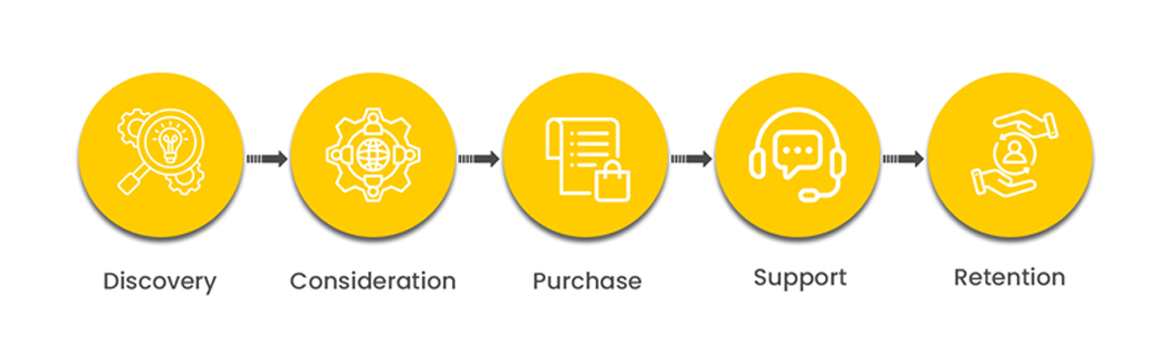
Identify every touchpoint: discovery → consideration → purchase → support → retention
Note where customers switch channels
Spot friction points and drop-offs
Omni-channel success depends on smooth transitions, not just channel presence.
3. Ensure Consistent Brand Experience Across Channels
Align tone, messaging, visuals, and offers
Use shared content guidelines and playbooks
Sync campaigns across channels in real time
Inconsistency breaks trust. Customers should feel like they’re engaging with one brand, not many teams.
4. Enable Context-Aware Interactions
Carry context across channels (previous actions, preferences, history)
Avoid forcing customers to repeat information
Trigger interactions based on real-time behavior
Context turns engagement from reactive to intelligent.
5. Use AI for Personalization
Personalize content, timing, and channel selection
Use AI to recommend next-best actions
Automate responses while keeping human escalation easy
AI allows personalization at scale, which manual systems can’t sustain. This is where platform solutions like Hubino help organization design AI-driven engagement layers that in turn will help businesses and brands to unify data, implement and analyze.
ALSO READ Case Study: Revolutionizing Customer Experience with Indigo Insurance
6. Connect Online and Offline Experiences
Sync digital interactions with in-store or field teams
Enable click-and-collect, appointment booking, and assisted sales
Share customer history across physical and digital channels
Customers don’t separate digital and physical, neither should your strategy.
7. Empower Teams with Shared Tools & Visibility
Give marketing, sales, and support access to the same customer insights
Use shared dashboards and alerts
Align teams around common customer goals
Omni-channel engagement fails when teams operate in silos.
Best Practices for Omni-Channel Customer Engagement
To get maximum value from omni-channel customer engagement, businesses must first focus on unifying customer data and journeys.
This means creating a single, real-time view of each customer across all touchpoints (digital and physical) and designing engagement around the end-to-end journey rather than isolated channels.
When data, context, and history flow seamlessly, customers can move between channels without gap, repetition, or loss of continuity.
The second-best practice is delivering consistent, context-aware, and personalized experiences at scale.
Every interaction, whether through email, chat, social, store, or support; should feel connected and relevant.
Using AI to understand intent, recommend next-best actions, and orchestrate interactions helps brands engage customers at the right moment, on the right channel, with the right message, while still allowing smooth handoffs to human teams when needed.
Finally, high-performing omni-channel strategies rely on aligned teams, meaningful metrics, and continuous optimization.
Marketing, sales, and support teams must share visibility into customer interactions and work toward common experience-driven KPIs such as retention, lifetime value, and journey completion.
By continuously learning from customer behavior and feedback, organizations can refine experiences, build trust, and turn omni-channel engagement into a long-term growth driver.
How to Evaluate Omni-Channel Success?
Evaluating the success of omni-channel customer engagement requires looking beyond individual channel performance and focusing on the overall customer experience and business impact.
Omni-channel Metrics Every
Customer-First Brand Should Know
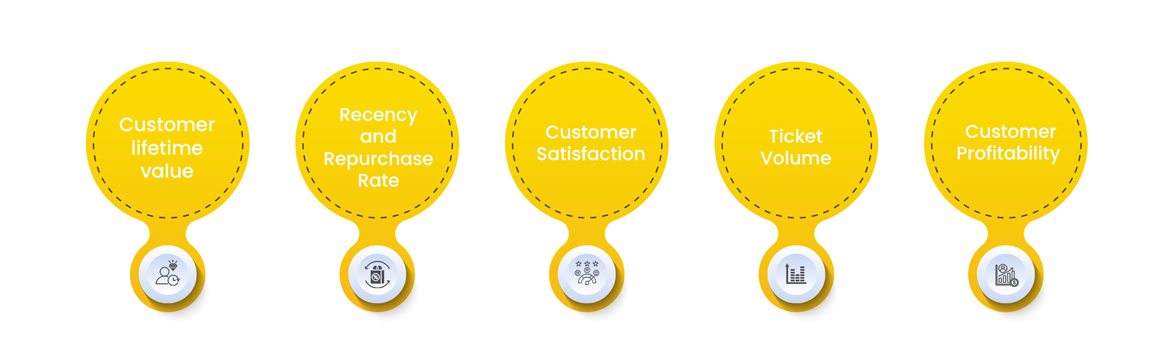
#1 Indicator:
The first indicator of success is how smoothly customers move across channels without gap, repetition, or drop-offs.
Metrics such as journey completion rate, cross-channel conversion paths, and time to resolution help reveal whether experiences feel truly connected.
| Journey Completion Rate |
Journey completion rate shows how many customers successfully complete an intended journey, such as making a purchase, resolving an issue, or booking a service across multiple channels. A high journey completion rate means: • Customers aren’t dropping off when switching channels • Handoffs between channels are smooth • The experience feels connected, not fragmented If customers start a journey and finish it without getting stuck or frustrated, your omni-channel strategy is working. |
| Cross-Channel Conversion Path |
This metric tracks how customers move across different channels before converting (buying, signing up, or taking action). Few customers convert in one step or on a single channel. They may: • Discover your brand on social media • Research on your website • Ask questions via chat or email • Complete the purchase later Tracking cross-channel paths shows which channels work best together, where customers switch, and where friction occurs. It reflects real customer behavior. |
| Time to Resolution |
Time to resolution measures how long it takes to fully resolve a customer’s issue, even if it spans multiple channels. A strong omni-channel setup: • Carries context across channels • Reduces repeated questions • Helps teams respond faster The faster the issue is solved without making customers repeat themselves, the better the omni-channel experience. |
#2 Indicator:
The second measure is customer value and loyalty.
Strong omni-channel engagement should lead to higher customer retention, repeat interactions, and increased customer lifetime value.
Improvements in engagement rates, personalization performance, and reduced churn signal that customers are receiving relevant, timely, and consistent experiences across touchpoints.
| Customer Retention Rate |
Customer retention rate shows how many customers continue to engage with or buy from your brand over time. When customers feel recognized and understood across channels, they are more likely to: • Return • Engage again • Stay loyal If customers keep coming back, your omni-channel engagement is creating lasting value. |
| Customer Lifetime Value (CLV) |
CLV measures the total revenue a customer generates throughout their relationship with your brand. Omni-channel strategies reduce gaps and improve experiences, which often leads customers to: • Buy more frequently • Spend more per interaction • Stay longer with the brand A smooth, connected journey improves experience and directly increases long-term revenue. |
| Engagement Rate Across Channels |
This metric tracks how actively customers interact with your brand across channels — clicks, replies, chats, visits, and interactions. Higher engagement usually means: • Content is relevant • Timing is right • Personalization is working When engagement drops, it often signals broken journeys, irrelevant messaging, or poor channel coordination. If customers interact more across multiple channels, you’re engaging them the right way. |
#3 Indicator:
Finally, operational and strategic outcomes confirm long-term success.
Reduced service costs, faster response times, better team productivity, and clearer customer insights indicate that channels and teams are working in alignment.
| First-Contact Resolution (FCR) |
FCR measures how often a customer’s issue is resolved in the first interaction, without follow-ups or escalations. With unified data and context, support teams can see the full customer history, making it easier to resolve issues quickly. Solving problems the first time saves effort for both customers and teams. |
|
Operational Efficiency Metrics (Reduced support costs; Faster response times; Improved team productivity) |
When systems, data, and teams are aligned: • Work isn’t duplicated • Teams don’t operate in silos • Automation reduces manual effort If your teams work smarter and faster while delivering better experiences, omni-channel is paying off. |
When omni-channel efforts deliver both measurable business results and consistently positive customer feedback, the strategy can be considered effective and scalable.
Build Your Omni-Channel Engagement with Hubino
To attract and retain customers, brands need to reach people on the channels they already use, with messages that feel relevant to them. Communication should focus on the customer experience, not what is easiest for the brand.
An omni-channel strategy helps brands deliver personalized messages at scale and understand what works across different channels. It also helps teams decide where to invest their time and improve campaigns continuously.
With a unified approach to data and engagement, Hubino helps businesses design and run omni-channel strategies that are easy to manage and built around real customer behavior.
FAQs (Frequently Asked Questions)
1. What is omni-channel customer engagement?
Omni-channel customer engagement is a strategy that delivers seamless and consistent experience across all customer touch points such as websites, mobile apps, social media, email, chat, and physical stores by connecting data, interactions, and context in real time.
2. How to get started with omni-channel engagement strategy?
Start by understanding your customers. Gather information about who they are, which channels they use, and how they interact with your brand. Use these insights to set clear goals and decide how success will be measured. Then choose the right tools and technology to support those goals.
3. Why is omni-channel customer engagement important in 2026?
In 2026, customers expect personalized, instant, and consistent experiences across devices and platforms. Omni-channel engagement helps businesses meet these expectations, improve customer loyalty, increase retention, and gain a competitive edge in experience-driven markets.
4. What metrics measure omni-channel success?
Key metrics include customer lifetime value (CLV), retention rate, journey completion rate, cross-channel conversion rate, first-contact resolution, and customer satisfaction scores.
5. What are the biggest challenges in implementing omni-channel engagement?
Common challenges include data silos, disconnected systems, inconsistent messaging, lack of real-time insights, and misalignment between teams. Overcoming these requires unified data platforms, AI-driven implementation, and cross-functional collaboration.